 Call 03 5991 7008
Dental Implants · Dr Lawrence Pawar · Cranbourne North
An implant is only as good as the gum and bone around it. We get that part right first.
Dr Lawrence trained for a year under one of the world's leading implant surgeons. Start your implant journey with a 45-minute consultation that tells you exactly what your case needs, what it costs, and how long it takes.
Watch: Dr Lawrence explains how dental implants work
Implant Consultation
$99 45 minutes with Dr Lawrence
Sit down with Dr Lawrence to find out whether an implant is right for you, walk through the full process, and leave with a quote based on your bone and gum - not a guess.
Ready? Book directly online.
Pick a day and time that suits you - confirmed straight away.
Book My $99 Implant ConsultationInstant confirmation. No obligation.
Not ready for that step yet? Answer a few quick questions below so our team understands your situation - and we'll offer you a free online consultation to work through your questions first. Or call 03 5991 7008, open 9am to 7pm, Mon to Fri.
Understanding What An Implant Is
Three parts that become one tooth.
A dental implant isn't a single piece. It's a titanium root, a connector, and a crown - built to work together and replace a tooth from the root up.
The three parts coming together. In your mouth they lock into one tooth.
Part 1
The Titanium Screw
The implant itself. A small titanium post placed into the jawbone where the bone fuses to it over a few months and it becomes a permanent root. We use Straumann implants - one of the most researched systems in the world.
Typical lifespan: 15 to 20+ years. We plan for it to last a lifetime.
Part 2
The Abutment
The connector that joins the screw to the crown. It passes through the gum, which is why the thickness and health of your gum matters so much.
Rarely needs replacing on its own.
Part 3
The Crown
The tooth you see and chew with, made to match the shape and shade of your own teeth. Like any tooth it takes daily wear, so it's the part most likely to need renewing one day.
Typical lifespan: 15 to 20 years, often longer with good care.
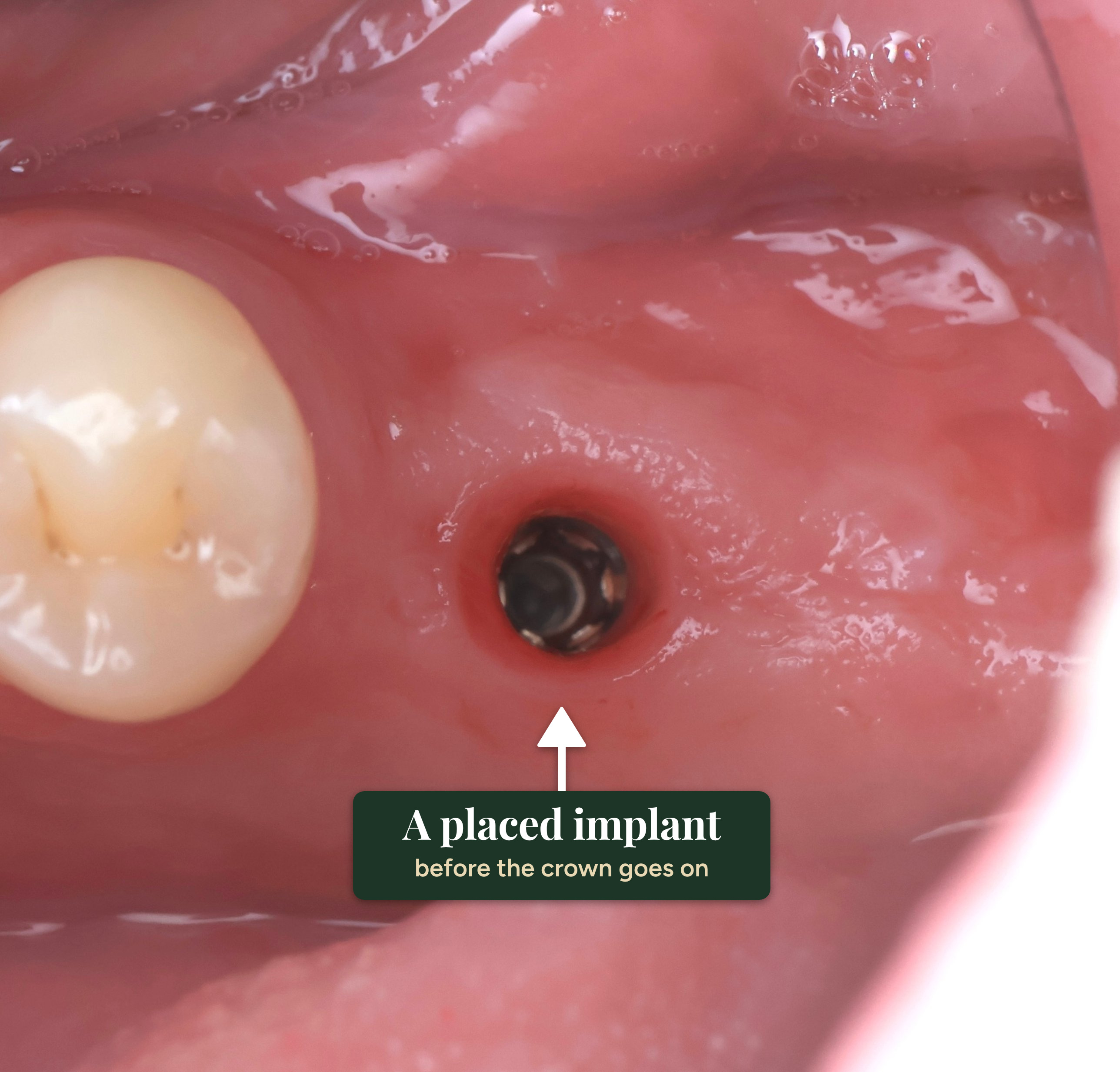
What it looks like in real life
One of Dr Lawrence's patients after the implant was placed and the gum had healed around it - before the crown goes on. This is the stage where the bone and gum do their work.
What Makes It Last
Anyone can place an implant and make it last five years.
Placing the screw is the easy part. Whether the implant is still healthy in 20 years comes down to what's around it.
Bone. We want at least 2 mm of solid bone on the cheek side of the implant - about the thickness of a 10-cent coin. Thinner than that, and the bone tends to shrink back over time, the gum follows, and the implant is left exposed.
Gum. Thick gum tissue acts like a collar that seals the implant and keeps bacteria out. Thin gum recedes and shortens the implant's life.
When either is lacking we build it up first - bone grafting to rebuild the foundation, gum grafting to thicken the tissue. That is what the difference between five years and a lifetime looks like.
Gum Quality
Healthy, stable gum tissue is the seal that protects your implant from bacteria and bone loss over the years.
Gum Thickness
Thin gums recede and expose the implant. Thick, well-supported tissue keeps it looking natural and staying healthy - and gum grafting can build it up where it's lacking.
Bone Quality
Solid bone is what anchors the implant. Where it's thin or soft, it must be rebuilt first with a bone graft - or the implant won't hold long term.
Real Results
The same patient, the same implant - before and after the crown.
Not a stock photo or an animation. This is how an implant actually looks in the mouth at the two stages that matter: once the implant has healed into the bone, and once the final tooth is on.
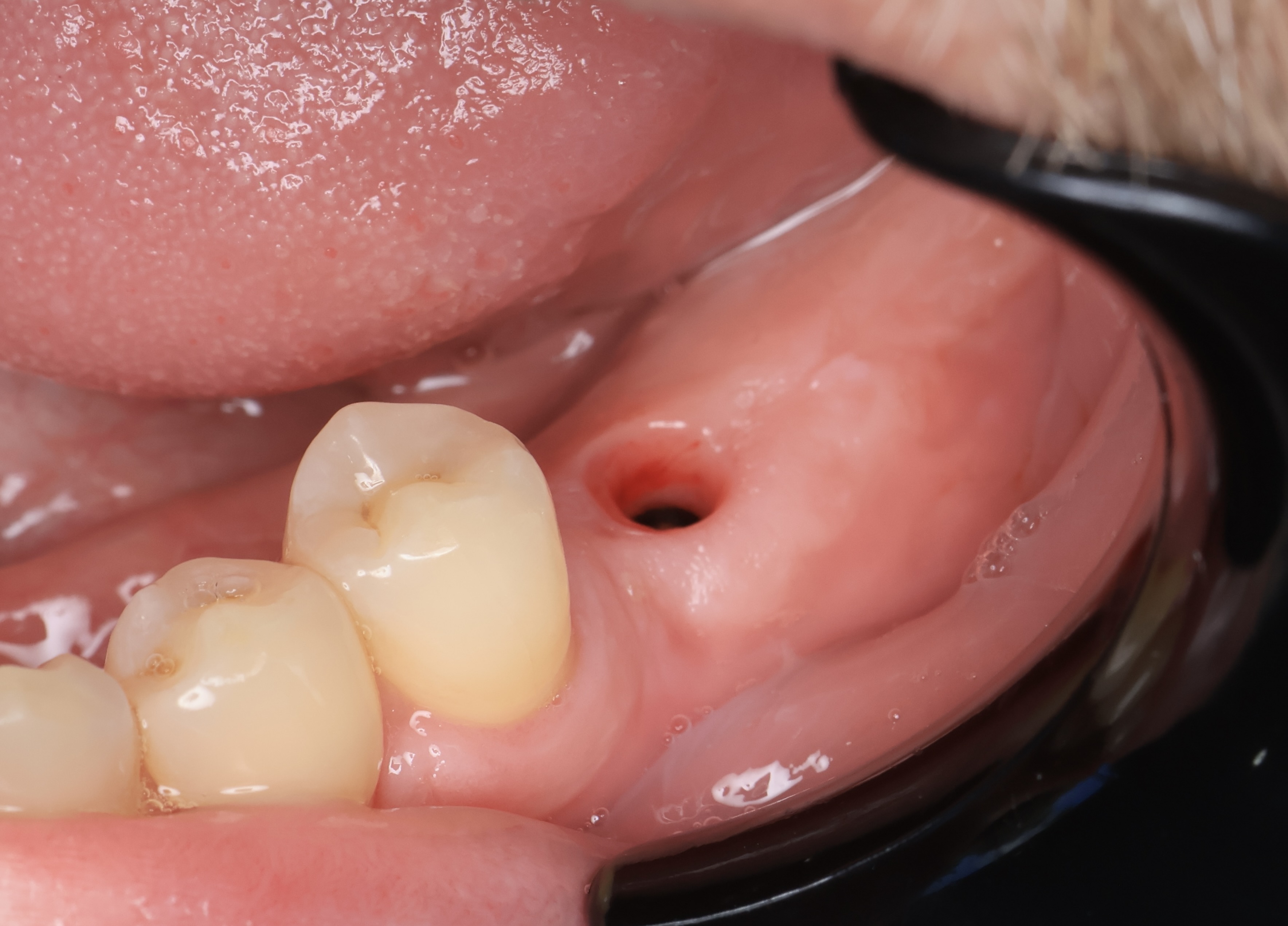
Before the crown
The implant has fused with the bone and the gum has healed around it. From here, the abutment and crown go on.
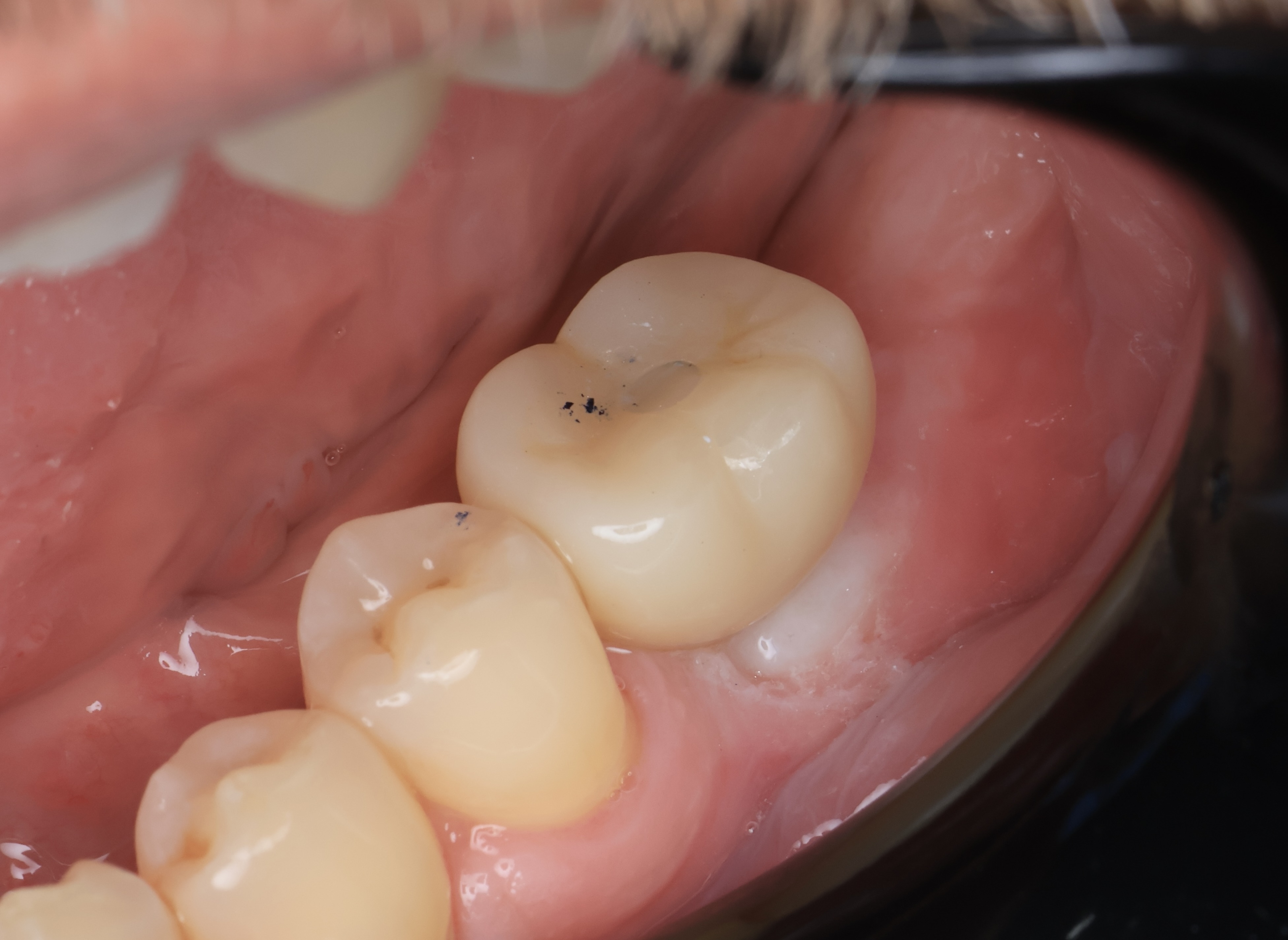
With the crown
The finished tooth, made to match the teeth either side. It looks, feels and works like the patient's own.
Clinical photographs of an Aura Dentists patient, shared with consent. Individual results vary depending on bone, gum and general health.
Your Implant Dentist
Trained by one of the world's leading implant surgeons.
Principal Dentist & Founder

Dr Lawrence Pawar
BDS (Hons) · gIDE Master Clinician Program in Implant Dentistry
Placing the implant is the easy part. Getting the gum and bone right so it lasts a lifetime - that's the work I trained for.
Dr Lawrence completed the one-year gIDE Master Clinician Program in Implant Dentistry under Dr Sascha Jovanovic - a Los Angeles periodontist regarded as one of the world's leading implant surgeons, a founder of Guided Bone Regeneration, and former Co-Director of the UCLA Dental Implant Center.
That training is why complex implant surgery - including bone and gum grafting - is done here in our Cranbourne clinic rather than referred elsewhere, and why every case is planned around the tissue first, not the implant.
BDS (Hons) · gIDE Master Clinician, Implant Dentistry · Fellow, International College of Dental Practitioners (ICDP)
Trusted By Locals
The most-reviewed dentist in Cranbourne.
135+ five-star Google reviews from local families. Doctor-owned and independent - never corporate.
Still Unsure?
Not ready to book? Let's talk it through first.
Answer a few quick questions below so our team understands your specific situation. We'll then offer you a free online consultation to work through your questions - before you commit to anything.
No obligation. Takes 60 seconds. Ready to book instead? Book your $99 consultation or call 03 5991 7008.
Your Options
One tooth, several teeth, or a whole arch.
Implants aren't one-size-fits-all. The right option depends on how many teeth are missing, your bone, and your budget. As a rule, the more implants involved, the higher the cost - so there is usually a sensible middle path.
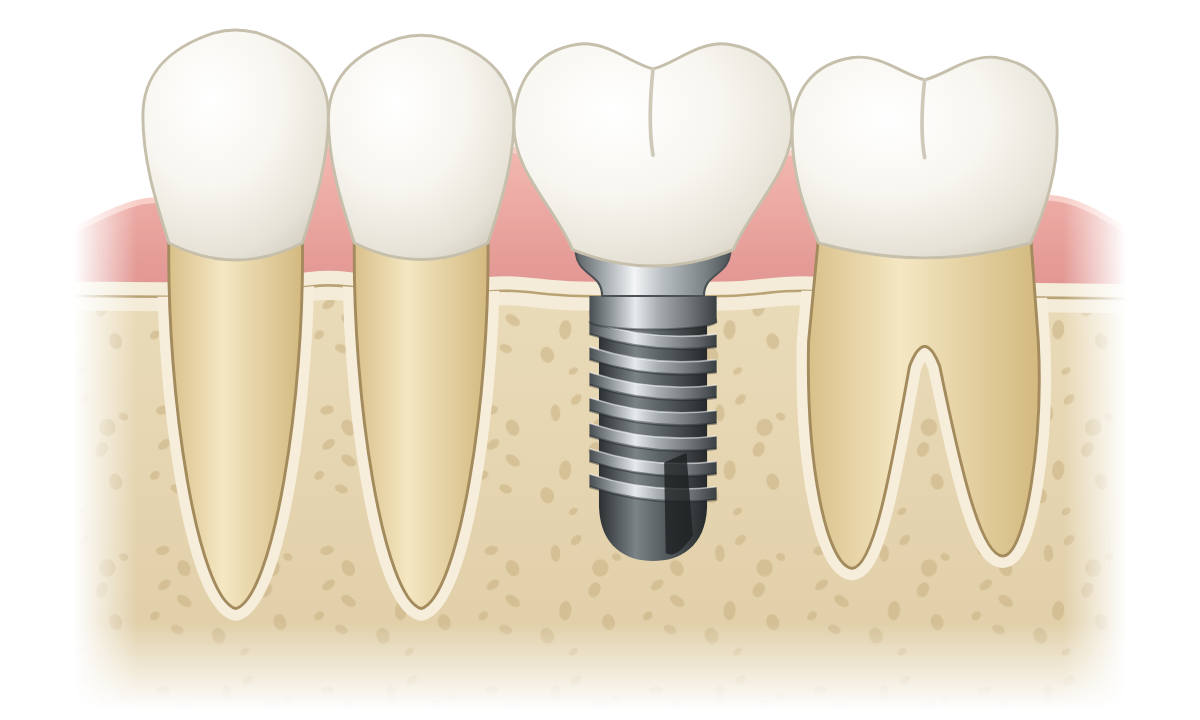
Missing one tooth
Single Implant
One implant, one crown. Fills the gap without touching the healthy teeth either side. The closest thing to getting your own tooth back.
1 implant
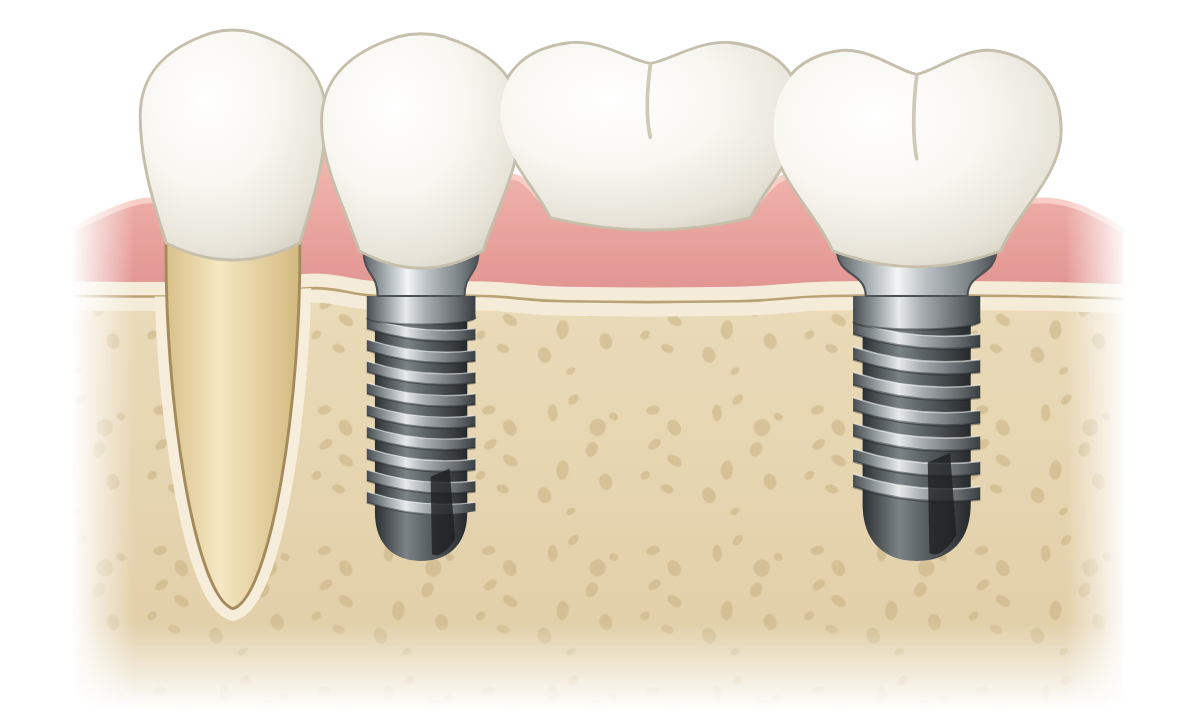
Missing several in a row
Implant Bridge
Two or more implants carry a row of joined crowns - so you don't need an implant for every missing tooth. Fixed in place; you clean it like your own teeth.
Fewer implants than teeth replaced
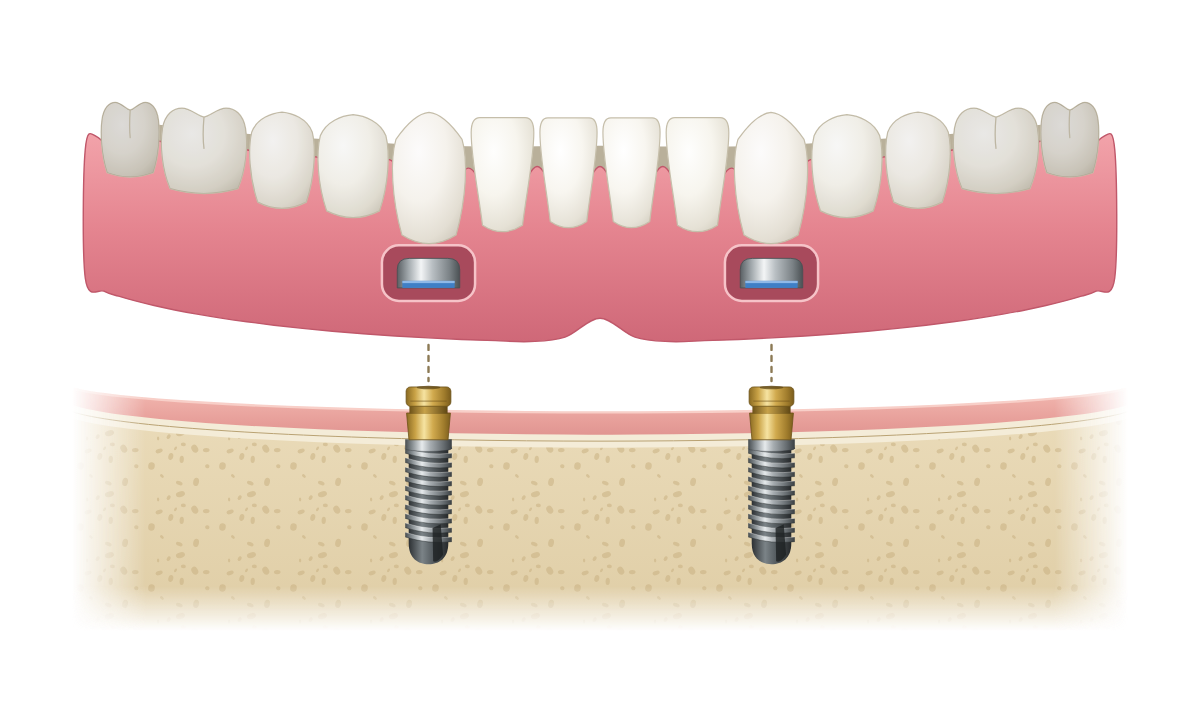
Loose dentures
Implant-Retained Denture
Your denture clips onto a small number of implants with locator attachments. It stays put when you chew and talk, but you can still take it out to clean. Often just two implants.
Minimal implants, big stability gain
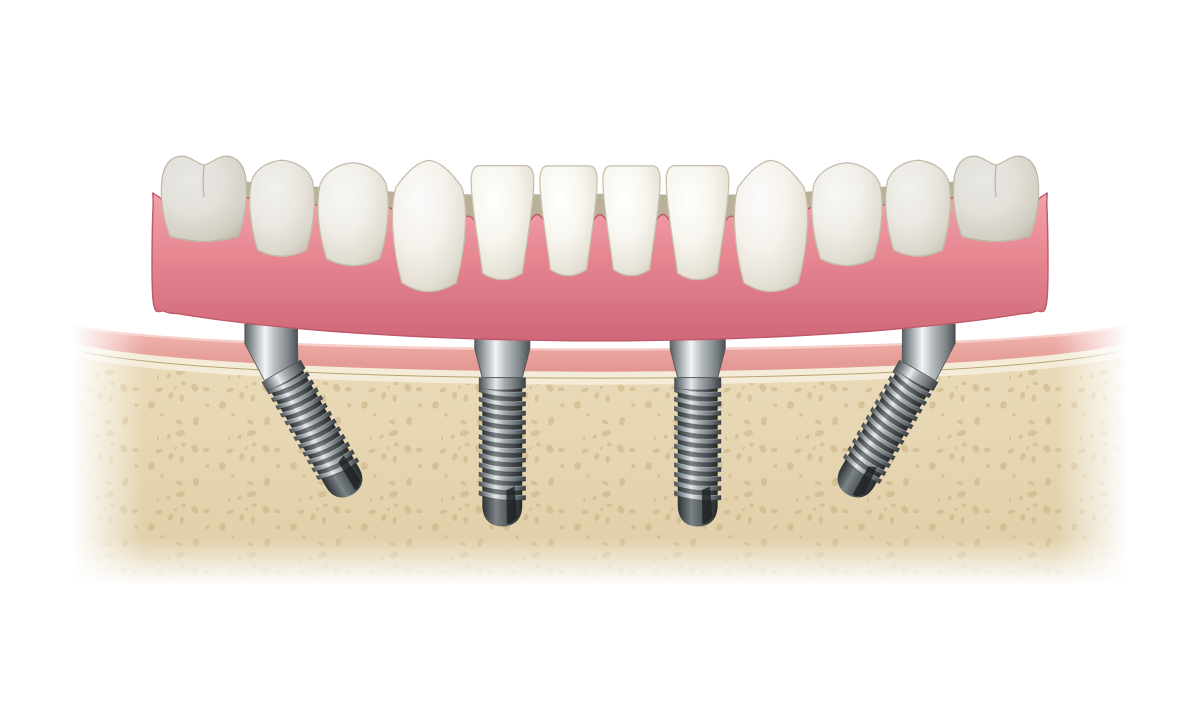
Missing most or all teeth
Fixed Full-Arch Bridge
A full set of teeth fixed permanently onto four or more implants. Nothing comes out, nothing moves - it works like a full set of natural teeth.
Most implants - the most stable, and the highest investment
Which one suits you depends on your bone, your gums, and what you want from your teeth. That's exactly what we work out together at your consultation.
Honest Pricing
We quote on the outcome, not just the implant.
Every mouth is different, so we don't give one flat price. Your quote is built from what your case actually needs - and it's designed to protect you if things don't go to plan.
Factor 1
Your bone
Enough solid bone means the implant goes straight in. Thin or soft bone means a bone graft first - which adds a step and adds to the cost.
Factor 2
Your gum
Thick gum protects the implant for life. Thin gum is thickened with a small graft so the implant is sealed properly.
Factor 3
How many teeth
A single implant, a bridge, or a full arch - the number of implants and the type of teeth on top drive most of the difference.
Factor 4
Your health
Healthy gums and good vitamin D, zinc and copper levels help the implant integrate. We check these up front so nothing surprises us later.
Setting You Up To Succeed
A few things need to be right before we place an implant.
Implants heal best in a healthy mouth and a healthy body. These are the things we look at - and sort out - before surgery, because they make the difference between an implant that integrates and one that struggles.
- No active gum disease. Gum (periodontal) disease has to be treated and stable first. Placing an implant into infected gums is asking it to fail.
- Good vitamin D levels. Vitamin D is what your body uses to build bone around the implant. Low levels are linked to slower healing and higher failure rates.
- Healthy zinc and copper. Both play a role in bone and tissue healing. If they're low, it's easy to correct before we start.
- A blood test before surgery. We can refer you for bloods so we know your levels, rather than guessing. It's a small step that protects a big investment.
- A 3D CBCT scan. A detailed 3D X-ray of your jaw that shows exactly how much bone you have and where. It's how we plan the implant position to the millimetre.
The Process
From consultation to a permanent tooth.
Most cases take between 3 months and a year from start to finish. Where you land in that range depends on your bone and gum - if grafting is needed first, it takes longer, because we give the tissue time to heal properly.
Step 01
$99 Consultation
45 minutes with Dr Lawrence. CBCT scan, assessment of your bone and gum, your options explained, and a quote for your case.
Step 02
Prepare the Foundation
If needed: treat any gum disease, correct vitamin levels, and graft bone or gum so the implant has what it needs to last.
Step 03
Place the Implant
The titanium implant is placed under local anaesthetic. Over the following months the bone fuses to it - this is the part that can't be rushed.
Step 04
Fit Your New Tooth
Once integrated, the abutment and your custom crown go on. You leave with a tooth that looks, feels and works like your own.
Start your implant journey with a straight answer.
45 minutes with Dr Lawrence, a 3D scan of your jaw, your options explained, and a quote built on your bone and gum - not a guess. Or if you'd rather talk first, answer a few questions and we'll offer you a free online consultation.
Book My $99 Consultation Not sure yet? Answer a few questions or call 03 5991 7008Implant Questions
Frequently Asked Questions
How many implants will I need?
It depends on how many teeth are missing and where. One missing tooth usually means one implant. Several teeth in a row can often be replaced with an implant bridge on two or three implants. A loose denture can be stabilised with as few as two implants and locator attachments, and a full fixed arch typically needs four or more. We'll show you the options and the cost of each at your consultation.
Should I get an implant or a bridge?
A conventional bridge works by grinding down the healthy teeth either side of the gap and using them to hold a false tooth. That means permanently damaging two good teeth to replace one, and bridges are often harder to clean underneath and tend not to last as long. An implant stands on its own without touching the neighbouring teeth, which is why it's widely regarded as the gold standard when a tooth is missing. There are cases where a bridge is the right call, and we'll tell you honestly if yours is one.
How long does the whole process take?
Anywhere from about 3 months to a year. If your bone and gum are already good, it's at the shorter end. If grafting is needed first, we allow time for that to heal before the implant goes in, and then more time for the implant to fuse with the bone. We use a CBCT scan at your consultation to show you exactly where you sit and map out a realistic timeline.
How long will my implant last?
The implant itself should last 15 to 20 years or more, and we plan for it to last a lifetime. The crown on top typically lasts 15 to 20 years before it may need renewing, like any tooth that takes daily wear. How long each part lasts depends on your gum and bone health, your general health, and how well the implant is looked after - which is why we spend so much time getting those right first.
Why do you ask about vitamin D, zinc and gum disease?
Because they directly affect whether the implant fuses with your bone. Vitamin D, zinc and copper are all involved in bone and tissue healing, and active gum disease is a leading cause of implant failure. We can refer you for a simple blood test before surgery so we know your levels, and we make sure any gum disease is treated and stable first. It's a small amount of preparation that protects a big investment.
What happens if something doesn't go to plan?
Occasionally an implant doesn't integrate with the bone, or a graft needs a second attempt - that's biology, not a mistake. We quote on the outcome, so your quote already allows for these possibilities rather than hitting you with a surprise bill. We'd rather you know that up front.
What happens at the $99 consultation?
You'll have 45 minutes with Dr Lawrence. We take a 3D CBCT scan, assess your bone and gum, talk through whether an implant is suitable for you, explain the process and timeline, and give you a quote for your case. If you're ready, book directly online. If you'd like to talk first, answer a few quick questions on this page and we'll offer you a free online consultation.
Does getting an implant hurt?
The procedure is done under local anaesthetic, so you shouldn't feel pain during placement. Most people find the discomfort afterwards milder than they expected and manageable with simple pain relief. We'll walk you through exactly what to expect before anything happens.
Do you offer payment plans?
Yes. We offer in-house payment plans, interest-free for up to six months, with longer terms available. We'll go through the options with you at your consultation so the cost fits around you.